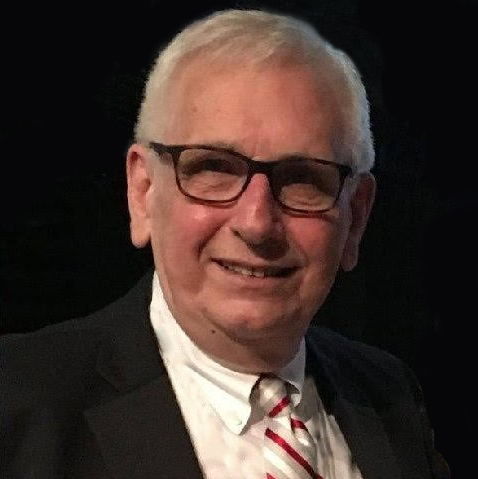
Nolan Jager Loyde received a degree in music education from the University of North Texas, his master’s degree in educational leadership from Stephen F. Austin State University, and is currently pursuing a doctoral degree in education and community leadership from Texas State University. He serves as the director of fine arts for the Round Rock Independent School District. He has performed and conducted on many world class stages, including the Midwest Clinic and the Texas Music Educators Association convention. Loyde is a nationally recognized adjudicator, clinician, and advocate, appearing at Music for All and Drum Corps International events and numerous state music educator conferences and marching championships. Loyde is passionate about sharing his experiences and perspectives with educators, students, and community members who advocate for student achievement through the arts.
This session invites participants to reconnect with the core ideas of a “Culture of Excellence” grounded in the framework of voice, access, and influence. The session will provide opportunities to reflect on how this work is evolving, with a focus on leadership that builds engagement, purpose, and shared responsibility. Participants will examine ways that their growth as leaders can meaningfully impact their communities.

David Dockan is an assistant professor of music education at Louisiana State University where he teaches elementary music methods, courses in teaching music in diverse settings, and where he champions the integration of popular music in the curriculum. His goal is to help teachers design a curriculum that mirrors the diverse musical landscape of their students’ lives. His research has been published in leading journals, including the Bulletin for the Council of Research in Music Education, the Music Educators Journal, and The Orff Echo, focusing on democratic music education, popular music pedagogies, and inclusive music classrooms. In 2022, he collaborated with Dr. Martina Vasil to develop a masterclass on Orff Schulwerk and popular music education. Dockan envisions classrooms where students create music that reflects their diverse experiences and cultural backgrounds.
Music teachers hold a great deal of power and agency in their classrooms, but carrying all these decisions alone can become a burden. This session explores what happens when we share that power with students to build a learning environment that can increasingly “run itself.” This session will look at practical ways to invite student voice into classroom routines, curriculum, and repertoire. Ideas shared include using student chosen music and skills as a pathway to validate musical identities and strengthen engagement, ownership, and buy-in.

David Dockan is an assistant professor of music education at Louisiana State University where he teaches elementary music methods, courses in teaching music in diverse settings, and where he champions the integration of popular music in the curriculum. His goal is to help teachers design a curriculum that mirrors the diverse musical landscape of their students’ lives. His research has been published in leading journals, including the Bulletin for the Council of Research in Music Education, the Music Educators Journal, and The Orff Echo, focusing on democratic music education, popular music pedagogies, and inclusive music classrooms. In 2022, he collaborated with Dr. Martina Vasil to develop a masterclass on Orff Schulwerk and popular music education. Dockan envisions classrooms where students create music that reflects their diverse experiences and cultural backgrounds.
An important goal for students is to develop pedagogical agency, and that only happens when teachers intentionally share the power of learning with them. In this session, participants will explore teaching practices that empower students to follow their curiosities, make meaningful choices, and increasingly guide their own learning journeys. The session will look at practical project-based flows that move from whole-class collaboration to individual creativity and expression.

Michele Henry is a professor of choral music education and the director of music education at Baylor University. Henry teaches undergraduate music education courses, supervises student teachers, and oversees the music education program. She specializes in vocal sight-reading instruction and assessment. Henry is the co-author of the Level Up! sight-reading series which focuses on a systematic approach to individualized sight-reading instruction and assessment. Her research appears in many top journals, as well as Oxford and GIA presses. Henry is on the editorial boards for the Journal of Music Teacher Education, the Southwestern Musician, and Texas Music Education Research. She is also heavily involved with certification policies for music teachers. She holds a doctorate from the University of Minnesota and a master’s degree from the University of North Texas.
The session will provide a review of pedagogical strategies for aural skills and vocal sight-reading instruction and assessment, including real world applications and problem-solving for teachers in middle school and high school choral classrooms.

Michele Henry is a professor of choral music education and the director of music education at Baylor University. Henry teaches undergraduate music education courses, supervises student teachers, and oversees the music education program. She specializes in vocal sight-reading instruction and assessment. Henry is the co-author of the Level Up! sight-reading series which focuses on a systematic approach to individualized sight-reading instruction and assessment. Her research appears in many top journals, as well as Oxford and GIA presses. Henry is on the editorial boards for the Journal of Music Teacher Education, the Southwestern Musician, and Texas Music Education Research. She is also heavily involved with certification policies for music teachers. She holds a doctorate from the University of Minnesota and a master’s degree from the University of North Texas.
with guest Maddie Bowen, Senior Music Education Major, Baylor University
A research-based discussion of best practices for teachers to avoid burnout, find rest, and thrive both personally and professionally. Using the framework of seven types of rest, participants will learn how to recognize risk factors and build solutions. Educators will be encouraged to create daily routines to support well-being, and proactively keep personal life and classroom life balanced.

Chris Knighten is director of bands and professor of music in the department of music at the University of Arkansas. His duties include conducting the wind ensemble, leading the graduate instrumental conducting program, teaching conducting and band literature courses, and overseeing all aspects of the band program. Under his direction, the University of Arkansas Wind Ensemble has performed at three College Band Directors National Association divisional conferences. In his previous role as director of athletic bands, the Razorback Marching Band grew to more than 350 members and performed at the FedEx Liberty Bowl, BCS SugarBowl, and AT&T Cotton Bowl. Knighten has presented sessions on band literature and pedagogy for numerous conferences. His articles on conducting and band literature have been published in the Teaching Music through Performance series, The Journal of Band Research, The Instrumentalist, and Today’s Music Educator. Knighten holds a doctor of musical arts degree in instrumental conducting and a master of music degree in wind conducting from the University of Colorado Boulder.
Teachers are more than halfway through the academic year. Classroom patterns are set and students know what to expect. There’s a good chance that the routine has become… routine! In this two-part seminar, participants will explore ways to energize teaching with fresh approaches to familiar rehearsals. The sessions will include discussion for teachers of beginning through high school ensembles and will also include review of many resources and texts.

Sara Simons is an associate professor of instruction at University of Texas at Austin, where she is the head of the bachelor of fine arts theatre education program. Her teaching interests include theatre for social change, process drama, multicultural education, and curriculum design. She teaches classes for pre-service theatre educators, which include designs for instruction and creative drama I and II. Simons received a grant to develop a signature course called Art and the Epidemic, where students examine art created in response to both the AIDS crisis and COVID-19. The University of Texas honored her with the 2020-21 College of Fine Arts Distinguished Teaching Award. Simons has a degree in theatre and women’s studies from Wellesley College, a master’s in theatre education from Emerson College, and a PhD in educational theatre from New York University. Her research has been published in Youth Theatre Journal, TYA Today, The Journal of Applied Arts & Health, and Annals of Behavioral Medicine.
In this class, participants will refresh their creative drama facilitation skills in the areas of warm-ups, kinesthetic activities, story drama, and teacher-in-role. Participants will revisit some activities from the summer of 2025, and learn new techniques to bring directly to their students in kindergarten through sixth grade. No experience in leading creative drama is necessary, just a willingness to play!

Drew Richardson, known as Drew the Dramatic Fool, is the first person in the 21st century to have new, short, silent films shown in major motion picture theatres. In addition to being a silent film star in the wrong century, he has toured his solo shows at art centers, theatres, and festivals nationally and internationally, including the International Comedy Festival in China. Richardson played with Squonk Opera in the Broadway touring production of Bigsmorgasbordwunderwerk and has devised and directed for theatre companies across the United States. He has a degree from Ohio University and a degree in theatre performance pedagogy from Virginia Commonwealth University. Richardson studied with Jacques Lecoq in Paris, is a certified Essential Somatics exercise coach, and has a teacher’s certificate from the Michael Chekhov Association. He teaches many varieties of physical acting and comedy for theatre companies, colleges, and universities, both in-person and online, around the world.
This workshop revisits non-verbal acting techniques drawn from silent films and physical theatre. This approach will be applied to short and absurd scripted-scenes, allowing words and movement to play together. Participants will practice problem-making and dilemma-solving as ways to rehearse plays and original material.

Paige Medlock teaches visual art and art education courses, and she supervises student teachers at Middle Tennessee State University. She serves on the board of the Tennessee Art Education Association (TAEA) as president-elect and was awarded the TAEA 2024 Art Educator of the Year award for Middle Tennessee. Medlock holds a degree in art education from Asbury University in Kentucky, a degree in visual culture from the University of Aberdeen, Scotland, and a practice-based doctorate in visual culture from the University of Stirling, Scotland. Medlock is a practicing artist with large-scale commissioned stained-glass installations in three countries. She presents at regional, state, national, and international conferences on ways that visual art education can navigate trauma and provide pathways to well-being. Her research and artwork focus on visual art as a place where an inner shift can occur that transforms the way people act and interact.
Is it possible to cultivate well-being through creative practice, both as artists and as art educators? In this session, participants will discuss how to heal and bring joy through art education, including through such practices as sketchbook thinking and project planning. Participants will also learn how to identify obstacles to creative well-being and how to inspire artistic renewal in themselves and others.

Thom Knab was an elementary art educator at Dodge Elementary in East Amherst, New York, from 1990 until his retirement in 2024. He earned degrees in art education from Buffalo State University, and in 2023 he served as an instructor at the elementary level for the Tennessee Arts Academy. A past president of the National Art Educators Association (NAEA), he received their Eastern Region Art Educator Award in 2024 and both the National and Eastern Region Elementary Art Educator Honors in 2018. He has been a keynote speaker for many state, regional, and international conferences. Knab has been published several times in SchoolArts Magazine, the NYSATA News, and the NAEA News, and has exhibited artwork in four solo shows as a collage and assemblage artist. He is a 2020 inductee to the National Teachers Hall of Fame, 2023 NAEA Distinguished Fellow inductee, and was named the 2025 NAEA Art Educator of the Year.
“Collage” is derived from the French word coller, meaning “to glue”. It is an artistic process of assembling disparate materials onto a surface. However, collage can be so much more. It’s not just cutting pictures out of magazines and gluing them onto another surface. This workshop will explore various collage concepts and techniques which will take us beyond the norm. Participants will learn about 3-dimensional collage and have opportunities to explore traditional and novel collage techniques.
Bradley Foust is the fine arts supervisor for Bartlett City Schools in Bartlett, Tennessee, and is an online instructor of music history and appreciation for Southern New Hampshire University. He received his doctorate in music education from Boston University and has worked as a music teacher and fine arts administrator for more than twenty years in Kentucky, Oregon, and Tennessee. In 2018, he was awarded the Distinguished Service Within the Profession Award from the Tennessee Art Education Association.
Participants will join a facilitated conversation about AI, creativity, and their relationship to arts education. The group will explore ways that AI is shaping instruction, policy, and conversations about creativity in the arts and beyond. Questions are encouraged. This conversation is the first in a series, with others to take place in-person at the Arts Academy Summer Institute.
Bryan Braue serves as associate director of bands and director of athletic bands at Middle Tennessee State University, where his responsibilities include directing the Band of Blue Marching Band, overseeing the athletic band program, conducting the university’s symphonic band, and teaching a variety of music education courses. He earned his doctorate with an emphasis in instrumental conducting from the University of Florida, and studied with Dr. David Waybright, professor Jay Watkins, and Dr. Chip Birkner. Prior to his appointment at Middle Tennessee State University, Braue served as director of bands at the University of Texas Permian Basin and taught courses in conducting and music education. In addition to his work at the university, Braue is a nationally recognized clinician, guest conductor, and adjudicator.
This session explores the deeper purpose behind secondary band programs, and why they matter to students, schools, and communities. Consideration will be given to how teaching choices shape student growth, school culture, and community engagement. Participants will leave with renewed purpose, practical ideas, and reflection tools to help define a personal “why” and inspire students to do the same.
Christy Bock is an elementary music educator with twenty-six years of experience in Knox County Schools. She is fully certified in Orff-Schulwerk and has been active in music education leadership at both the local and state levels. Bock is involved in local chapters of the American Orff-Schulwerk Association and the East Tennessee General Music Association.
Emily Knight teaches elementary music in Camden, Tennessee, and has sixteen years of experience as an elementary music educator. She is fully certified in Orff-Schulwerk and is a founding member and past president of the Quad State Orff Chapter. Knight holds a bachelor’s degree from Webster University and a master’s degree from Kent State University. She frequently presents for Orff chapters around the nation.
Abbi Miller is in her eighth year of teaching elementary music and currently teaches in Murfreesboro, Tennessee. She is fully certified in Orff-Schulwerk and is working toward Kodály certification. Miller holds a bachelor’s degree from Middle Tennessee State University, a master’s degree from Anderson University, and an education specialist degree in curriculum and instruction from the University of West Florida.
Feeling the second-semester slump? Join experienced music educators who work with students in kindergarten through fifth grade for a session packed with student-tested activities designed to re-energize your classroom. Participants will leave with practical, adaptable lessons and strategies that have been successfully used with students to keep learning both meaningful and engaging through the remainder of the school year.

Will Chander is the current director of Schola Cantorum at Middle Tennessee State University, where he also teaches courses in choral conducting and music theory. Prior to teaching in college, Chandler spent seven years as a public-school choir director in the state of Texas. Outside of his teaching duties, Chandler is an active guest conductor, clinician, and presenter. He has worked with all-region and district honor choirs and will be making his Carnegie Hall debut in April 2026. He has presented for the Texas Music Educators Association and the American Choral Directors Association National Conferences. He received his doctor of musical arts in choral conducting from the University of Kentucky and holds additional degrees from the University of Southern Mississippi and Millsaps College.
There are few things more exciting than a good thrift store find. Join Will Chandler as he shares how to find repertoire from public domain and other low-cost sources. Educators can find great “thrift” pieces that shine a new light on historic choral literature and fit the needs of any ensemble.

Rebecca Pogue Fields serves as head of elementary school programs at the Alliance Theatre at the Woodruff Arts Center in Atlanta, Georgia, where she facilitates the design, administration, and delivery of arts integrated, in-school residency programs in more than three hundred classrooms each year. She also facilitates theatre education programs and teacher training utilizing the STEAM (science, technology, engineering, arts, and mathematics) education model. STEAM learning integrates the arts into the traditional STEM curriculum to enhance creativity and critical thinking skills. Fields enjoys training educators at various levels to introduce best practices in arts integration, transform teacher practices, and establish strategic partnerships. She graduated from the University of Georgia with a fine arts degree in dance and received a master’s degree from the University of Kentucky. Fields has previously worked with Young Audiences Arts for Learning and the Center for Puppetry Arts in Atlanta.
Have you ever wanted to incorporate dance and movement into your elementary science classroom, but need help with the first step? In this interactive session, participants will experience a brief dance warm-up and learn basic choreography strategies that can apply to any science content, whether teaching the parts of the flower, pollination, pollution, or the water cycle!

Brad Willcuts is associate professor of musical theatre and choreography at Michigan State University. His professional credits include Broadway, national tours, international and regional theaters, and the Metropolitan Opera. He served as associate director and choreographer for the Dolly Parton musical Here You Come Again, which premiered at the Delaware Theatre Company then toured internationally. Willcuts has also served as associate choreographer or fight choreographer on Amazing Grace (on Broadway), Legende Holmes (Sherlock Holmes, the Legend – in Prague), Catch the Wind (in Denmark), and Porgy and Bess (with the Metropolitan Opera). He choreographed the reimagined, pre-Broadway production of The Fantasticks.
What is the best way to prepare a theatre scene that needs a punch or a kiss with middle or high school students? This workshop will explore ways to safely and effortlessly move your student actors into the scene based on the high energy and excitement that the narrative provides.
Nichole Hahn is the product designer and educational consultant for MoxieBox Art. She has more than twenty years of experience as a visual arts educator. Hahn received a degree from the University of Wisconsin-Stout then continued her education at Saint Mary’s University of Minnesota (formerly known as the University of Saint Mary’s.) She has been a member of the National Art Education Association since she was a university student and was honored as the Minnesota Art Educator of the Year 2018. Hahn has a blog called MiniMatisse.blogspot.com, which has connected her with educators from around the world.
This enjoyable activity is suitable for drawing with children as young as second graders through students in upper elementary grades. The focus for the lesson will be a rabbit. Discussion will include how to adapt and scale this lesson for different age groups.
Laura Sturgill has been an art educator for twenty-one years. She taught for twelve years in the Metropolitan Nashville Public Schools and nine years at Oak Hill School in Nashville, Tennessee. She has presented at Tennessee Arts Academy, as well as in district-wide professional developments. She currently teaches second through sixth grade students and especially enjoys collaborating with local artists and educators to keep her lessons exciting. She loves painting, fiber arts, traveling, and spending time with her husband and two sons.
This session will include a slide presentation on the Harlem Renaissance that specifically features Aaron Douglas, who was also the head of Fisk University’s art department. His murals and other work depict major themes of social justice, African history, and the importance of education. His pieces often include strong figures–mainly painted in silhouette–as well as symbols and color stories to give his work more impact. Handouts will be provided that will walk students through the work, then help them plan their own painting about an issue that is personally meaningful. Participants will leave the session with a unit plan and will have time to start a painting of their own.

Joe Giles is founder and dean emeritus of the Tennessee Arts Academy and former director of the Tennessee Department of Education Arts Education Program. He received his bachelor’s and master’s degrees in music education from Austin Peay State University and has done additional study at Peabody College, Middle Tennessee State University, and Fisk University. Giles is past president of the Southern Division of the National Association for Music Education (NAfME) and of the National Council of State Supervisors of Music. He taught music in Metropolitan Nashville Public Schools for twenty-two years, has taken choral groups on concert tours in Europe, and has received gold and silver medals in international music festivals. Giles is the 2011 recipient of TAA’s Lifetime Achievement Award, which was renamed the Joe W. Giles Lifetime Achievement Award in his honor that same year. TAA participants fondly remember Giles’s annual “Thoughts for the Journey” messages he imparted at the conclusion of the TAA Summer Institute that always inspired and challenged each person in attendance to live their calling to the fullest.

About the Fisk Jubilee Singers®…
Fisk University opened in Nashville in 1866 as the first American university to offer a liberal arts education to “young men and women irrespective of color.” Five years later the school was in dire financial straits. George L. White, Fisk treasurer and music professor, created a nine-member student choral ensemble and took it on tour to earn money for the University. The group left campus on October 6, 1871, and Jubilee Day is celebrated annually on October 6 to commemorate this historic day.
The first concerts were in small towns. Surprise, curiosity, and some hostility were the responses to these young black singers who did not perform in the traditional “minstrel fashion”. One early concert in Cincinnati brought in $50, which was promptly donated to victims of the Great Chicago Fire. When they reached Columbus, the next city on tour, the students were physically and emotionally drained. White, in a gesture of hope and encouragement, named them “The Jubilee Singers,” a Biblical reference to the Year of Jubilee in the Book of Leviticus, Chapter 25. Continued perseverance and beautiful voices began to change attitudes among the predominantly white audiences. Eventually skepticism gave way to standing ovations and critical praise. Gradually they earned enough money to cover expenses and return to Fisk.
In 1872, they sang at the World Peace Festival in Boston and at the end of the year President Ulysses S. Grant invited them to perform at the White House. In 1873, the group grew to eleven members and toured Europe for the first time. Funds raised that year were used to construct the school’s first permanent building, Jubilee Hall. Today, Jubilee Hall, designated a National Historic Landmark by the United States Department of Interior in 1975, is one of the oldest structures on campus. The beautiful Victorian Gothic building houses a floor-to-ceiling portrait of the original Jubilee Singers, commissioned by Queen Victoria during the 1873 tour as a gift from England to Fisk.

About the Conductor…
G. Preston Wilson, Jr., is the director of the Fisk Jubilee Singers® in the school of humanities and behavioral social sciences at the historic Fisk University in Nashville, Tennessee. A native of Durham, North Carolina, Wilson returned to Fisk and to the Fisk Jubilee Singers®, in which he sang under the direction of the late Paul T. Kwami. After graduating from Fisk University and Bowling Green State University, Wilson began teaching at various schools in the Toledo Public Schools system in Toledo, Ohio. His longest tenure was at Start High School where he oversaw five choral ensembles, the school dance team, and served as an advisor for the African American Culture Club.
In June 2021, Wilson graduated from the University of Missouri, earning a doctorate in music education. He then served as the assistant professor of music education at Westminster Choir College of Rider University in Lawrenceville, New Jersey, before returning to his alma mater. Wilson is the chair of diversity initiatives for the Tennessee American Choral Directors Association and serves on the board of directors for the Nashville African American Wind Symphony, the Music City Review, and Vocal Arts Nashville.
.png)


The Tennessee Arts Academy is honored to partner with the businesses and organizations below, whose support reflects a shared commitment to the power of arts education. Their support helps strengthen our mission and build a lasting foundation for the arts across Tennessee and beyond.
Arrowmont School of Arts and Crafts
ArtsEd Tennessee
Belmont University College of Music and Performing Arts
Center of Excellence for the Creative Arts at Austin Peay State University
College of Liberal Arts of Middle Tennessee State University
Country Music Hall of Fame
Drama Notebook
Frist Art Museum
Germantown Performing Arts Center
Knoxville Museum of Art
Ludus
Pioneer Drama
Plaza Artist Materials
Smith & Kraus Publishers
Steinway Piano Gallery Nashville
Tennessee Shakespeare Company
Tennessee Technological University School of Music
The Mary B. Martin School of the Arts at ETSU
Theatrefolk
University of Memphis, College of Communications and Fine Arts
University of Tennessee at Chattanooga Department of Theatre
Wilson Bank & Trust


